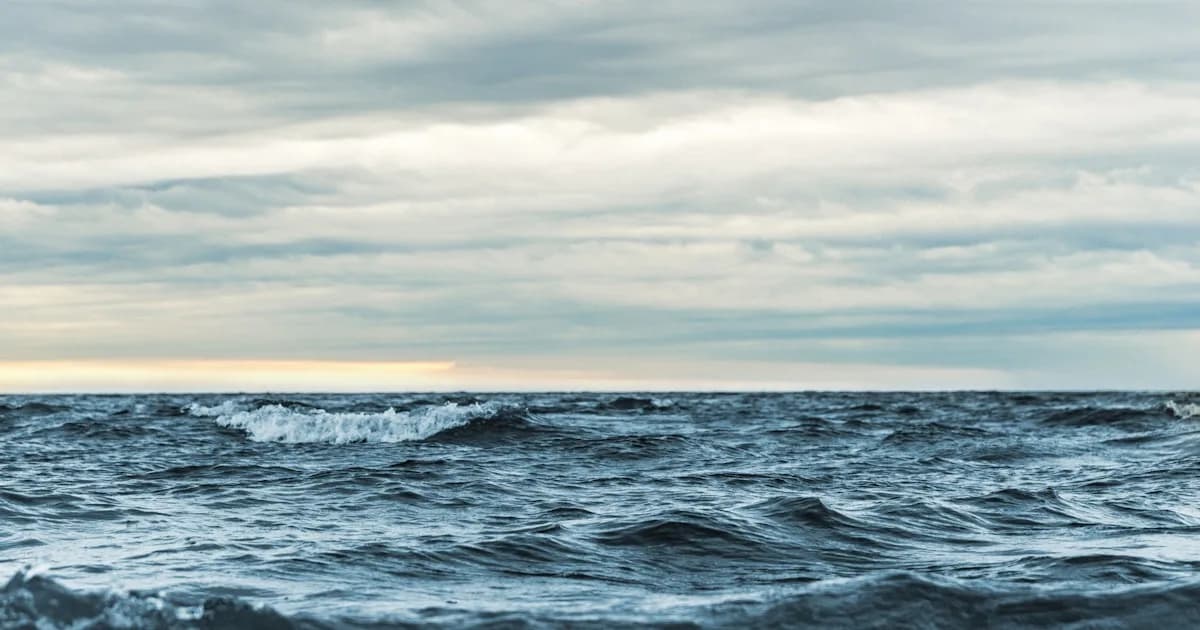
When ocean symbolism appears in dreams, it often arrives with a particular intensity — the vastness of it, the movement, the sense of something both magnetic and slightly unknowable. If you've encountered the ocean in your dreams, the first question worth sitting with is not what it means, but what it felt like to be there. Did the water feel inviting or overwhelming? Were you standing at the shore, swimming in it, watching it from a distance? What emotion accompanied the experience before any interpretation began? These questions matter more than any symbolic definition, because the ocean you encountered in your dream is inseparable from your own history with water, your current life circumstances, and the particular moment when this image arrived.
The Emotional Register of Oceanic Dreams
Before exploring what the ocean might represent, it's worth lingering with the feeling of it. The experience of being near water in a dream is rarely neutral. The ocean can evoke awe — a sense of standing before something immense and ancient. It can evoke fear: the undertow, the depth, the awareness that you cannot see the bottom. It can evoke peace: the rhythm of waves, the vastness creating a kind of release from the small concerns of daily life. It can evoke longing, or restlessness, or the particular ache of being drawn toward something you cannot name. Some dreamers report feeling held by ocean water, as if the vastness itself were maternal. Others feel exposed, aware of their smallness against such magnitude.
The emotional data is the most direct information your dream is offering. It arrives before meaning, before symbolism, before any attempt to decode. A dreamer who pays attention to the feeling — the particular texture of the emotion — is already in conversation with the material in a way that matters. What changes in your body when you remember standing in that ocean? What does the feeling remind you of? Is there a time in your waking life right now that carries a similar emotional signature? These questions do not require you to understand what the ocean symbolizes. They simply ask you to recognize what you felt.
Why the Ocean Appears Now: Timing as Meaning
One of the most useful questions a dreamer can ask is not what an image means, but why it is appearing now. A dream does not arrive in a vacuum — it emerges at a particular moment in your life, during a particular season of experience. If ocean symbolism has appeared in your recent dreams, it may be worth considering what is happening in your waking life at this moment. Are you standing at a threshold? Facing a decision that feels larger than your usual concerns? Moving through a period of emotional intensity that you haven't yet fully processed? Experiencing a kind of vastness — grief that feels oceanic, or possibility that opens in multiple directions at once? The timing of when a symbol appears is part of its meaning. The ocean you encounter in a dream during a period of major life transition carries different weight than the ocean you encounter during a stable, settled time.
Asking why now does not mean the dream is predicting the future or warning you about something. It means recognizing that your inner life is in conversation with your outer life, and that the images arriving in your dreams are responsive to where you are. A dreamer who lost someone recently may encounter the ocean as a representation of grief's vastness. A dreamer contemplating a major change may encounter it as a symbol of the unknown territory ahead. A dreamer recovering from a difficult period may encounter it as a symbol of having survived submersion and returned to shore. None of these readings contradicts the others. What matters is that you bring your own context to the symbol, not the other way around.
Multiple Meanings Without Resolution
In many psychological traditions, water has been understood as connected to the unconscious — the parts of yourself that are not easily accessible to waking awareness. The ocean, in particular, has been associated with emotional depth, with the vast and largely unexplored interior landscape that lies beneath the surface of consciousness. Some dreamers find this language resonates. They recognize in the ocean dream an encounter with material that is deep, powerful, and not entirely under their control. But for other dreamers, this interpretation may feel incomplete or not quite right. Perhaps the ocean in your dream felt more like freedom than like the unconscious. Perhaps it felt like vastness without depth — a horizontal infinity rather than a vertical one. Perhaps it reminded you of a specific place where something significant happened in your life, and the ocean's meaning is rooted in memory rather than psychology. All of these readings are valid. A dream image that can sustain multiple meanings simultaneously is richer, not more confusing.
The ocean in dreams may represent emotional turbulence — the sense of being overwhelmed by feelings you cannot fully understand or control. It may represent emotional capacity — the recognition that you contain depths that are not always visible to the world. It may represent transformation, as water is transformative in mythology across cultures. It may represent the boundary between the known and the unknown, the place where solid ground gives way to something unmeasurable. It may represent grief, longing, peace, dissolution, renewal, mystery, or the sublime — that particular experience of encountering something beautiful and terrifying at once. It may mean something entirely different for you, something rooted in your personal history and your particular relationship with the ocean in waking life. The question is not which of these meanings is correct. The question is which resonate with your experience, and what happens when you sit with the image without forcing it to settle into a single interpretation.
Staying With the Ocean: A Practice of Continued Attention
If ocean symbolism has appeared in your dreams, one of the most valuable things you can do is not to seek its meaning but to return to it. Keep a record of each ocean dream you have — not to interpret it, but to notice what shifts over time. What are you doing in the ocean in different dreams? Are you swimming, drowning, wading, watching from shore, standing at the bottom and looking up? What is the water like — calm or stormy, clear or murky, warm or cold? Do the same emotions appear across different ocean dreams, or do they vary? Do you notice patterns emerging that the single dream might not reveal? This kind of sustained attention to recurring material produces something that interpretation alone cannot: self-knowledge that deepens. The dreamer who has tracked their ocean dreams across months or years develops a familiarity with their own inner landscape, learns to recognize their own patterns, begins to sense what this particular symbol means specifically to them.
You might also try this practice: after recording a dream in which the ocean appears, sit with it for a moment before moving on. Close your eyes. Return to the dream in your imagination. Feel the water. Notice what comes up — not interpretation, but simple noticing. Is there a question emerging? Something you want to understand about yourself? A memory or a current situation that the dream seems to be pointing toward? Write freely about this, without trying to arrive at any conclusion. What you're doing is not decoding the dream. You're developing a relationship with it — the way you might develop a relationship with a place you keep returning to. Each return teaches you something new, not because the dream has changed but because you have changed in relation to it.
Your History With Water Matters More Than Any Symbol
The ocean you encounter in your dream cannot be separated from your personal history with actual water. If you grew up near the ocean, it carries one kind of resonance. If you nearly drowned as a child, it carries another. If you love swimming and spend time in the water regularly, the ocean in your dreams will mean something different than it does for someone who fears deep water. If you have traveled across the ocean, if you have stood on a shore at a moment of profound change, if you have watched storms over water or felt calmed by its rhythm — all of this is part of what the ocean means when it appears in your dreams. A dream interpreter or a symbolic dictionary cannot know any of this. But you do. Before you reach for an interpretation, bring your own context. What is your relationship with the ocean in waking life? What memories or associations does water hold for you? What would it mean if the ocean in your dream was not a symbol at all but an encounter with something you actually know and have felt?
Some dreamers find that when they bring their own context to the symbol — when they ask what the ocean specifically means to them, in their life, with their history — the dream becomes less mysterious but not less significant. It becomes more personal. The meaning belongs to you, not to tradition or psychology. This is the shift that moves you from trying to interpret a dream to inhabiting it — developing an ongoing relationship with the material that belongs uniquely to your own experience. And that relationship, tended over time, becomes a form of self-knowledge that no external authority can provide.
What should I do if I'm afraid in an ocean dream?
Fear in a dream is not a warning — it is material worth exploring. If you find yourself afraid in an ocean dream, the first question is not what the fear means but what it feels like. Is it the fear of drowning, of being lost, of going too deep, of being exposed? Does the fear feel proportional to what's happening in the dream, or does it feel like it belongs to something else in your waking life? Sometimes a fear that appears in a dream is showing you something about yourself that waking life doesn't easily surface — a vulnerability, an awareness of your own smallness, a boundary you've been ignoring. Rather than trying to resolve the fear, try staying with it. What happens if you allow yourself to feel afraid in the dream without immediately needing to fix it or understand it?
Can recurring ocean dreams tell me something important about my life?
Recurring dreams are often offering something important — not a prediction, but a message from your deeper self about something that deserves attention. If the ocean keeps appearing in your dreams, it may be that you're encountering the same emotional territory repeatedly, or approaching the same psychological threshold from different angles. Rather than asking what the recurring dream means, you might ask: what is this dream insisting that I notice? What part of myself or my life does the ocean represent that I'm not fully engaging with in waking hours? Recurring dreams often soften and shift once the dreamer begins to pay genuine attention to them — not to understand them, but to acknowledge what they're pointing toward.
What does it mean if I'm swimming vs. drowning in the ocean in my dream?
The distinction between swimming and drowning is significant, but not in the way fixed interpretations suggest. Swimming might indicate a sense of moving through emotional material with some agency and skill — but it might also indicate that you're navigating something that feels effortless or fluid. Drowning might indicate overwhelm — but it might also indicate the sensation of surrendering to something larger than yourself, of letting go. What matters is not the action itself but what it feels like to be in that action, and what is happening in your waking life that resonates with that feeling. A dreamer actively engaged in emotional work might dream of swimming through turbulent water. A dreamer in the early stages of a major transition might dream of drowning without panic, as if the dissolution were necessary. The action is not as meaningful as the emotional texture of the action.
Should I try to change what happens in an ocean dream if it scares me?
Some dreamers practice lucid dreaming or try to consciously alter difficult dreams. This can be helpful in some cases — giving you a sense of agency in nightmarish material. But before moving to change the dream, you might first ask what it would mean to meet it as it is. What is the dream showing you that you might be avoiding? What feeling is so insistent that it needed this difficult form to reach you? Sometimes the work of dream practice is not to fix the material but to develop a relationship with it that includes understanding rather than escape. That said, there is no single right approach. If changing the dream feels necessary and helpful to you, that is valuable information about yourself as well.
How long should I sit with an ocean dream before trying to understand it?
There is no timeline for this. Some dreams yield their meanings quickly — a connection becomes obvious, a question resolves itself after a day or two of reflection. Other dreams resist resolution for months or years. Rather than waiting for a deadline to pass before understanding the dream, you might simply notice when understanding arrives, if it does. The deeper practice is not understanding but attention. A dream that remains opaque but that you continue to notice, continue to sit with, continues to touch something in you — that dream is doing its work even without explanation. The relationship with the material matters more than the interpretation of it.
If ocean symbolism has appeared in your recent dreams, consider this: rather than reaching immediately for what it might mean, spend a week simply noticing. Each time you remember an ocean dream, write a single sentence about the feeling of it — not what it means, but what it felt like to be there. Do not interpret. Do not explain. Simply record the feeling. At the end of the week, read back through what you've written. What emerges? What patterns do you notice in the feelings themselves, apart from any symbolic meaning? What relationship are you developing with this recurring image? This simple practice — sustained attention without forced interpretation — may teach you more about yourself than any symbolic dictionary ever could.