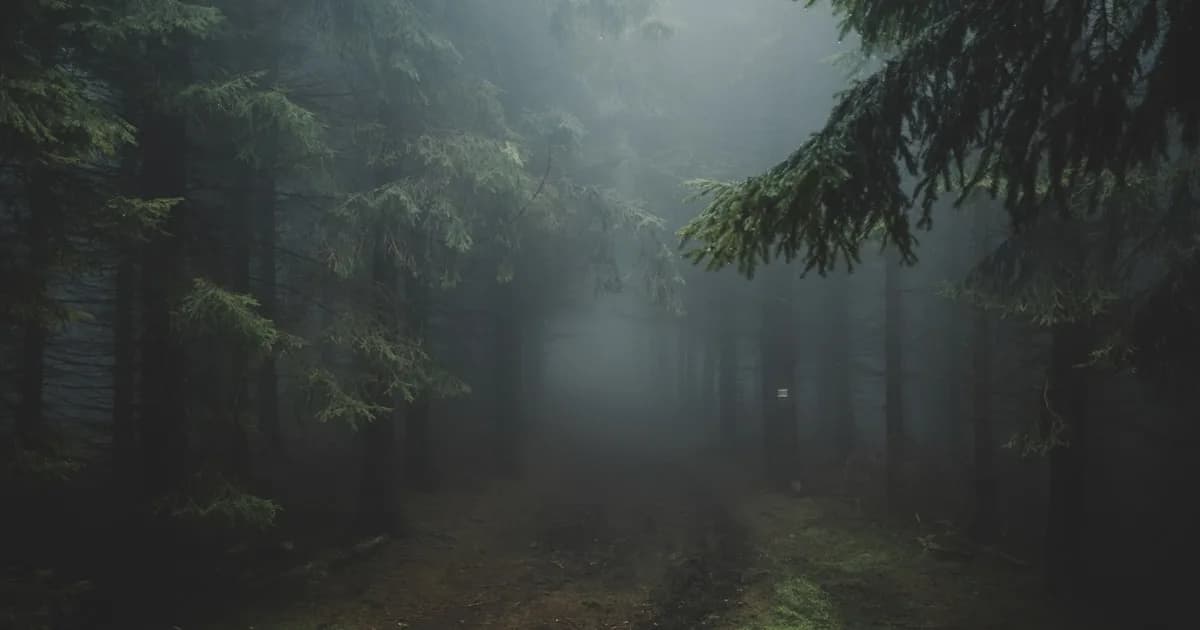
Forest path symbolism appears frequently in dreams, yet its meaning resists simple reduction. A forest path is not primarily about reaching a destination — though many dream interpretation systems treat it that way. Instead, the forest path often reflects something more immediate and personal: how you are moving through uncertainty, what draws your attention, where you hesitate and where you feel confident. If a forest path appeared in your dream last night, the first question worth asking is not 'where is this path leading?' but rather 'what is my relationship with moving forward when I cannot see the whole way?'
What Forest Path Symbolism Actually Reveals
Before considering cultural interpretations or archetypal patterns, sit with the emotional register of encountering a forest path in your dream. Was there a feeling of curiosity as you approached it? A sense of hesitation or dread? Did the path feel inviting or restrictive? These emotional impressions are the primary data — the most direct communication from your dream. The path itself is secondary. A dreamer who feels excitement when stepping onto a forest path is encountering different material than a dreamer who feels trapped or confused. Context is inseparable from symbol.
The forest path also reveals how you relate to not knowing what comes next. Unlike a highway or street where you can see far ahead, a forest path typically offers limited visibility. Trees obscure the way forward. The path itself may wind, disappear around a bend, or fork into multiple directions. This is not coincidental imagery. Your dream is showing you something about how you move through life when you cannot plan everything in advance, when you must take each step with only partial information about where you will end up. The path becomes a mirror for your relationship with uncertainty itself.
Rejecting the Destination Narrative
Many traditions approach the forest path through a goal-oriented lens: the path represents your life journey, and where it leads determines the dream's meaning. A clear path means clarity. A dark path means danger. A winding path means complications ahead. This interpretation framework treats the path as instrumental — valuable only for what it leads to. Door of Dreams rejects this approach. The path is not primarily about where you are going. It is about how you are moving and what quality of attention you bring to movement itself. This distinction changes everything about how you work with the material.
Forest Path Symbolism Across Personal Context
A forest path holds different weight depending entirely on your own history. A dreamer who grew up hiking forests will encounter this image differently than someone who has never been comfortable in wild spaces. A dreamer who associates forests with solitude and refuge experiences different material than one who finds them disorienting or claustrophobic. Someone who is currently navigating a major life transition — a career change, a relationship ending, a move to a new place — may find this image more charged with meaning than someone in a stable period. The symbol itself remains constant. What it communicates shifts based on the dreamer's particular life and particular moment.
Reflection Questions for Your Forest Path
Cultural and Psychological Context
In Jungian psychology, the forest often represents the unconscious — those aspects of yourself that are less developed or less visible. The path through it becomes a symbol of individuation, the gradual journey toward wholeness and self-knowledge. This language can be useful, but only if you do not mistake it for explanation. The Jungian framework offers one possible vocabulary for your experience, not the definitive reading. In many Indigenous traditions, forests are understood as living spaces with their own agency and wisdom. The path is not something you traverse — it is a relationship you enter. In folklore and fairy tales, forest paths often mark transitions between ordinary and enchanted worlds, between what is known and what is mysterious. Again, each of these perspectives illuminates something. None of them exhausts what your dream is communicating.
Practice: Mapping Your Relationship with the Path
Rather than reaching for a single interpretation, consider this practice: sketch or write about the path from your dream. Draw where you were walking, mark the places where you felt curiosity — places where something caught your attention or drew you forward. Mark the places where you hesitated, where uncertainty appeared, where you wanted to stop or turn back. Mark the places where you felt confident or at ease. Do not try to make the marks mean anything specific. Simply create a record of your emotional movement through the dream space. Return to this sketch or writing over the next few days. Notice what shifts in how you understand it. Notice what stays consistent. This is the real work — not finding the right meaning, but developing an ongoing relationship with the material.