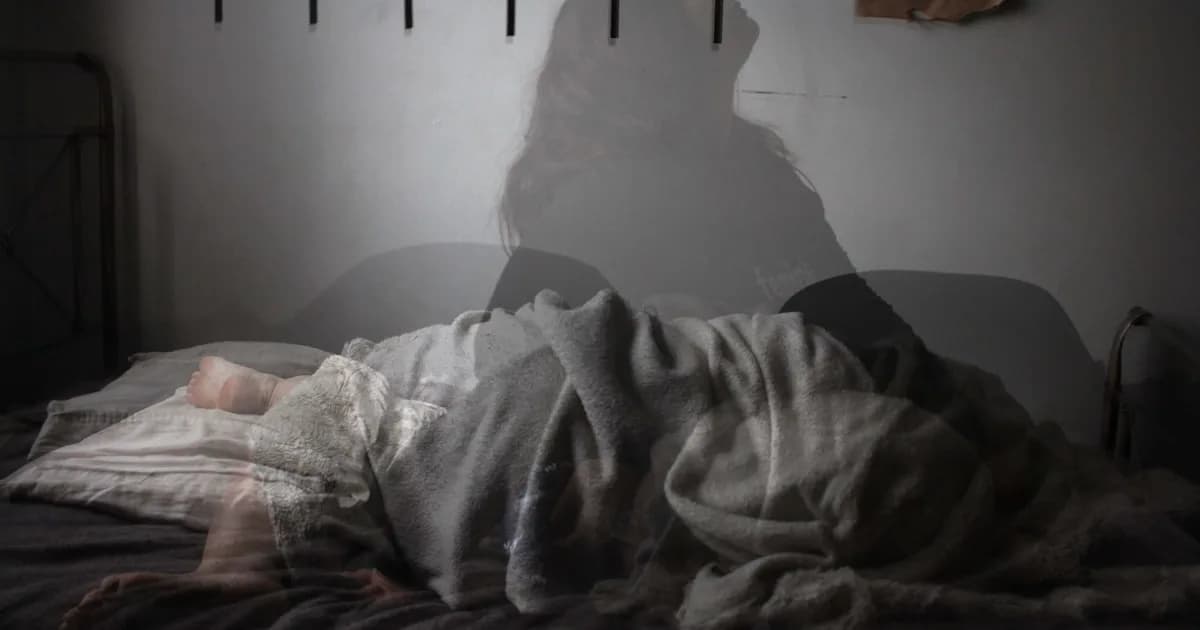
Most sleep advice treats darkness as a convenience. Dim the lights, block the windows, create a dark room — these are the instructions, delivered as if darkness were simply the absence of light. But observe what actually happens in your body when evening deepens: the pupils dilate, the shoulders soften, something in your chest releases. That is not the absence of light. That is a signal. Darkness and sleep are not connected because darkness is useful. They are connected because darkness is a language your nervous system still speaks, even though most of us have stopped listening.
The Difference Between Dimness and Darkness
There is a difference — and your body knows it — between a room that is dimly lit and a room that is dark. Dimness is compromise. A lamp turned down, a screen filtered, candlelight. Darkness is a threshold. It is the moment when the eye gives up trying to see shapes and surrenders to what cannot be seen. In that surrender, something shifts. The mind stops trying to gather information from the world and begins turning inward. This is not a metaphor. The absence of visual input triggers a cascade of neurological changes: melatonin production increases, core body temperature drops, the brain's sensory gating tightens. But — and this is the part sleep advice usually misses — the quality of darkness matters. A room lit by a single LED clock is not dark. A room filtered by ambient light from the street is not dark. The body knows the difference, even if the conscious mind does not register it.
Why Sleep Hygiene Misses the Point
The standard advice tells you to force conditions of sleep: keep the room cool, keep it dark, keep it quiet, keep it consistent. The language is the language of control — as if sleep were an object you could manufacture by assembling the correct components. But sleep is not manufactured. It is invited. And the invitation does not come from discipline. It comes from the body recognizing a signal it has known for 200,000 years. Darkness is that signal. Real darkness — not the compromise darkness of a dimmed room, but the darkness that says to your nervous system: the world outside has stopped. You can stop trying. You can turn toward the dream. The moment you treat darkness as a tool you are wielding rather than a language the body is speaking, you have already lost the thread. You are now forcing sleep instead of allowing it.
Darkness and Dream Availability
Here is what gets overlooked: the quality of your sleep affects the quality of your dreams. Not just whether you remember them — but whether they are available to you at all. In shallow sleep, dreams remain distant. In deep sleep preceded by a genuine descent into darkness, the dreaming mind has room to move. The dream is not just something that happens to you in the night. It is something the body must prepare for. That preparation is partly chemical (melatonin, temperature, cortisol). But it is also sensory and psychological. When the room is truly dark, the eyes relax. When the eyes relax, the visual cortex quiets. When the visual cortex quiets, the dreaming brain — which generates images from within — can finally be heard. A room lit by a nightlight is a room where the eyes are still, in some small part, trying to see. The dreaming mind competes with that effort. In true darkness, there is no competition. The dream arrives.
The Practice: One Evening Adjustment
Do not overhaul your bedroom. Do not install blackout curtains or buy blue-light glasses. Instead, make one small change tonight: one hour before you normally sleep, turn off every source of light in your room except the one you are using — and then turn that one off too. Sit in the darkness for a few minutes. Notice what your body does. Does it relax? Does restlessness come? Does your mind quiet or does it become louder? This is not a productivity exercise. You are not trying to become better at sleep. You are observing what happens when you remove one stimulus your nervous system has been processing, often without your awareness.
Then sleep. And in the morning, before you reach for your phone, ask: did the dreams feel different? Not longer, not more vivid, not more meaningful — did they feel different? Did the quality of them shift? Were they closer to you? Were you closer to them? What changed?
Frequently Asked Questions
Is complete darkness necessary for good sleep?
Not for everyone — but most people's bodies respond better to deeper darkness than they are currently experiencing. The question is not whether you need perfect darkness. The question is: how dark is dark enough for your nervous system to recognize the signal? For some people, that is true darkness. For others, it is a room lit only by starlight. The only way to know is to experiment and observe what your body tells you, not what a chart tells you you should need.
What about safety concerns or nighttime needs?
A small dim light source that you can reach easily without thinking — a touch-activated light, a single candle, a very dim nightlight — is different from ambient light throughout the room. The point is not to create danger. The point is to notice the difference between a room that is lit and a room that has given itself permission to be dark. You can have both safety and darkness. They do not exclude each other.
Can darkness improve dream recall?
Darkness does not automatically improve recall. But it does improve the conditions under which dreams can be deep and available. If you are remembering fragments while dreaming in shallow light, you might find that true darkness allows dreams to develop more fully — and sometimes that fullness makes them more memorable. But the memory itself comes from attention and intention, not from darkness alone.
Does the transition matter, or just the final darkness?
Both matter. A slow transition — dimming lights gradually over an hour — signals to your body that the world is closing down. An abrupt shift to darkness can feel jarring. The gentler the descent into darkness, the more naturally your nervous system recognizes it as permission to let go.
What if I live in a bright urban environment with street lights?
You are working against environmental conditions that signal alertness. This is worth acknowledging, but it is not defeat. Even in a bright city, you can create a darker microclimate — a room that is darker than the rest of your living space, even if it is not perfectly dark. Your body will still recognize the relative shift. Experiment with how much darkness your specific environment allows, and observe what changes at that threshold.