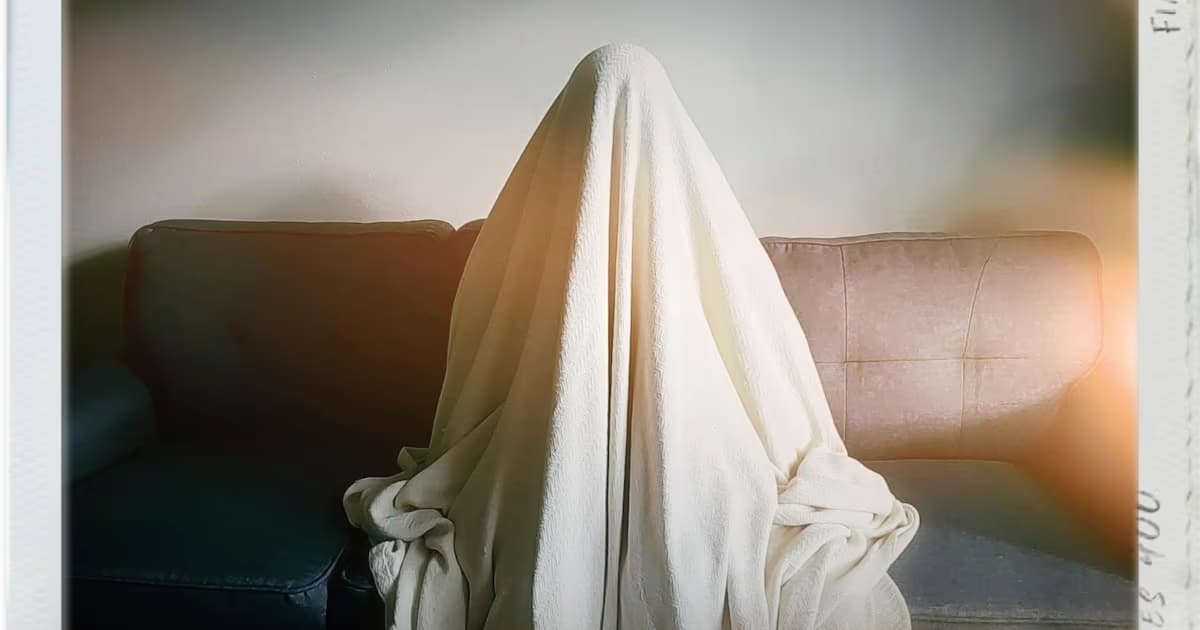
You notice something after a few nights without screens. The dreams feel different — not just more vivid, but closer, more present when you wake. The question of blue light and dream quality is not really about sleep duration. It is about what happens in the threshold between waking and dreaming, and whether your nervous system has permission to cross that threshold at all.
The Dream Begins Before Sleep
Most conversations about blue light assume the problem is simple: bright screens keep you awake, you sleep less, you dream less. That is partly true. But it misses something more subtle. The transition into dreaming is not a switch that flips at sleep onset. It is a process that begins in the hour or two before your head touches the pillow. Your nervous system is already preparing. Your awareness is already beginning to shift. Blue light — the particular frequency emitted by phones, tablets, and computer screens — interrupts that preparation at the neurochemical level. It signals to your brain that it is still daytime. Your melatonin production slows. But something else happens too: the quality of your attention changes. You remain in the waking frequency longer. You arrive at sleep from a different place.
This matters for dreams because dreams do not begin in sleep — they begin in the nervous system's transition. If you scroll until the moment your eyes close, you are asking your dreaming mind to arrive from a place of stimulation, fragmentation, and vigilance. The dreams that follow often feel thin, forgettable, or difficult to recall. They arrive from a system still half-convinced it is under threat. A different evening — one where you step away from screens an hour before bed — allows your nervous system to begin its own inquiry. Gradually. Unhurried. The dreams that follow have a different texture entirely.
What Changes When You Step Away
The conventional wisdom says: no screens before bed improves sleep. That is true but incomplete. A better description: no screens before bed changes what kind of dreams arrive. You may not sleep longer. You may sleep the same number of hours. But the dreams you have will feel more accessible. They will be easier to remember. They will have a quality of presence — as if the dream were waiting for you, rather than something you stumbled into accidentally on the way to somewhere else. This is not because blue light is inherently evil or because your body needs to be tricked into rest. It is because attention has a quality, and the quality of your evening attention determines the quality of the threshold you cross into sleep.
There is also something else: the darkness itself becomes a practice. When you remove the light source, you are not just removing a stimulus. You are creating a space for your eyes and nervous system to recalibrate. Candlelight. Lamplight. The quality of late evening without the particular frequency of screens. Your body recognizes this as different from daytime. Not because of a specific wavelength, but because it is familiar — this is the kind of light humans have been waking and sleeping by for thousands of years. Your nervous system remembers, even if your mind does not.
One Small Change, One Night
The strongest test is not a week or a month. It is tonight. One evening without screens during the final hour before bed. Not to achieve perfect sleep. Not to force your body into rest. But to observe what actually happens when you change the quality of light and attention you bring to the threshold. What is the texture of the dreams that follow? Do they feel easier to hold onto when you wake? Is there a difference in how close they feel — how present the images are? Are there more dreams, or simply dreams you remember more clearly? The answers vary by person, by evening, by what is happening in your waking life. But the experiment is true: you will notice something. The only question is what.
Do not change anything else. Same sleep time. Same bed. Same everything except: no screens for the hour before sleep. If you normally read on a device, read paper instead. If you normally check messages, let them wait. The change is small. The observation will be specific. And what you notice will belong entirely to you — not to a general claim about blue light, but to your own nervous system's response to an evening that feels different.
What the Research Says — Briefly
Neuroscience confirms what you may already sense: blue light wavelengths suppress melatonin production and delay the circadian rhythm's evening signal. This is real. But the research also shows something more interesting — the effect varies significantly by individual sensitivity, timing, and context. Some people notice dramatic shifts. Others feel little change. Neither response is wrong. The nervous system's sensitivity to light is personal, shaped by genetics, history, and what your body has learned to expect. Research also shows that the transition into sleep involves not just melatonin but a complex cascade of neurochemical shifts. These shifts are facilitated by a particular quality of attention — the kind that naturally arises in low, warm light, without the stimulation of incoming information. The research confirms: stepping away from screens allows this cascade to unfold more fully. But the specific way this manifests in your dreams — that is not something science can predict. That belongs to your own observation.
Questions to Carry Forward
Tonight, after you step away from screens and sleep, notice this when you wake: what is the quality of the dreams you remember? Are they vivid or faint? Close or distant? Do they have a sense of presence — as if they were waiting for you — or do they feel like they happened somewhere you were not quite invited? And if you notice a difference, ask yourself: what would it mean to let this become a regular evening practice? Not as a rule. Not as something you force. But as an invitation your nervous system can say yes or no to, night by night.
Does blue light really affect dream recall?
Blue light does not directly erase dreams. Instead, it affects the nervous system's ability to enter the transition state where dream recall becomes easier. When you are in a heightened state of alertness — which blue light promotes — you move from waking to sleeping more abruptly. This abrupt shift can reduce the gradual awareness of dreaming that allows memory to form. Removing blue light allows for a gentler threshold, making dreams easier to hold onto upon waking.
Is it just about sleep duration, or something more?
Many people assume that avoiding blue light simply helps you sleep longer. But research and lived experience both suggest something more nuanced happens: the quality of sleep changes, and with it, the quality of dreams. You might sleep the same number of hours, but those hours have a different texture. Dreams arrive with more clarity. They feel more accessible. This is not about duration — it is about the depth and continuity of your attention as you transition into the dream state.
How long does it take to notice a difference?
Some people notice shifts within one or two nights. Others take a week to observe clear changes. The variation depends on how sensitive your nervous system is to light, how much blue light you were exposed to before, and whether you are paying close attention to your dreams. The point is not to wait for proof — it is to experiment and observe your own response.
What if I need screens in the evening?
If work or life requires evening screen time, you have options: blue light filters reduce the problematic wavelengths without eliminating screens entirely. Some phones and computers have built-in settings (like Night Shift or f.lux) that shift the light toward warmer tones as evening approaches. The filter is not perfect, but it allows your nervous system some protection while you manage what you must do. The experiment still holds — reduce what you can, observe what changes.
Does this work the same way for everyone?
No. Some people are highly sensitive to light exposure and notice dramatic shifts in dream quality immediately. Others have different sensitivities entirely — they may respond more strongly to sound, temperature, or other factors. Your nervous system is unique. The practice here is not to follow a universal rule, but to observe your own response and let that guide what you do with your evenings.