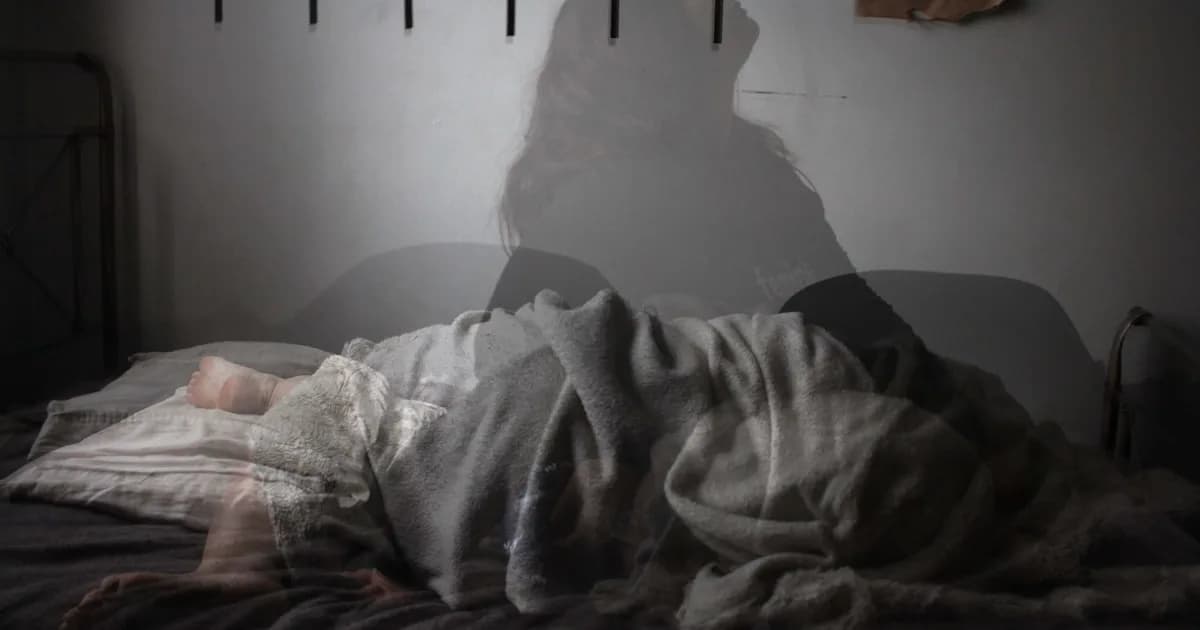
A broken mirror in a dream often arrives with a particular weight — sometimes jarring, sometimes unsettling, sometimes carrying a strange sense of recognition. Before asking what a broken mirror symbolizes, it is worth sitting with what it felt like to encounter this image while you were asleep. Was there fear in the moment? A sense of something fractured? Relief? Confusion? The emotional register of the dream — what you felt before your waking mind began to interpret — is where the genuine conversation with this material begins.
The Immediate Experience of Broken Glass
When glass breaks in a dream, it carries a specific kind of sensation — the sound, the jagged edges, the sudden disruption of what was whole. A mirror breaking is different from other breakage because mirrors are about reflection, about seeing yourself. The breaking is not just noise; it is a rupture in the act of self-seeing. Some dreamers report feeling startled by the breaking itself — the violence of it, even in the dream's soft logic. Others describe a strange calm, a witnessing of something fragmenting without being able to stop it. Still others describe a curious feeling, as if the breaking were revealing something that had always been hidden behind the reflection. These emotional experiences matter more than any symbolic interpretation because they are the dream speaking directly to your nervous system, your body, before language arrives.
What Might Be Happening in Your Relationship With This Image
A useful first reflection is to notice what your personal history is with mirrors and with broken things. Have you always felt comfortable seeing your own reflection? Is there a memory of actual broken glass that might be alive in your nervous system? Are you someone who tends to see yourself as fragmented, broken, or incomplete? These questions are not meant to produce a definitive answer but rather to create space for you to notice what this particular image is touching in your own life. The dreamer who broke a mirror as a child and carried superstitious fear for years will encounter this dream differently than someone who has never thought much about mirrors at all. The dreamer who is currently experiencing fragmentation in their self-image — questioning their identity, struggling with how they appear to others, noticing contradictions within themselves — will have a different relationship with this image than someone in a period of stable self-perception. What you bring to the image shapes what the image means.
Multiple Ways of Living With This Symbol
The broken mirror has been understood in many different ways across traditions and individual dreamers. In some psychological frameworks, it may point toward fragmentation — a sense that the unified self you present to the world is cracking, that you are becoming aware of contradictions or splits within yourself. This is not necessarily negative; fragmentation can precede integration. Sometimes we must see ourselves as broken before we can begin to understand the pieces. In other contexts, the broken mirror might connect to clarity — the shattering of illusion, the disruption of a false reflection. If you have been seeing yourself through a distorted lens — whether imposed by others or by your own harsh self-judgment — the breaking might be showing you a rupture in that distortion. The fragments might be scattered, but at least they are no longer presenting a unified false image. For some dreamers, a broken mirror connects to issues of perception itself. Can you trust what you see? Is the way you perceive yourself accurate? Is there something about self-perception that feels unreliable or fragmentary? The dream may be asking you to sit with these questions rather than rushing to fix the mirror or reconstruct a unified image. There is also the possibility that the dream is about loss — the loss of a reflection, the loss of something that allowed you to see yourself. Mirrors are tools for self-knowledge, for checking how you appear. When a mirror breaks, that tool becomes unavailable. What does it feel like to lose the ability to see yourself the way you have been seeing yourself? What emerges in that space?
Context From Psychology and Tradition
Jungian psychology sometimes understands mirrors as representations of the self or the persona — the image we construct and present to the world. When the mirror breaks in a dream, it may suggest that this constructed image is becoming unstable, that the work of maintaining a unified persona is becoming difficult or impossible. This is not a pathological sign; it can be a necessary disruption that allows for more authentic self-emergence. In various cultural traditions, mirrors have been associated with truth and illusion simultaneously — they show what is, but they also create a doubled image, a copy rather than the thing itself. A broken mirror might represent a disruption of this doubling, a moment where the boundary between self and reflection becomes unclear. Some traditions view broken mirrors as harbingers of difficult change; others see them as opportunities for renewal. The superstition of seven years of bad luck associated with broken mirrors in waking life has no psychological validity, but it is worth noticing if this superstition lives in your own unconscious mind. If you carry a fear of broken mirrors from cultural conditioning, that fear will color your dream experience. The dream may be asking you to examine whether you are living under the weight of superstitions that no longer serve you.
Staying With What Cannot Yet Be Resolved
It is possible that this dream does not resolve into a clear meaning. It is possible that the broken mirror is simply showing you something that feels true — that your self-perception is fragmentary, that you are seeing yourself in pieces, that something about how you understand yourself has been disrupted. None of these observations requires an explanation or a solution. Sometimes the dream is not asking you to understand but to notice. The invitation here is to remain in relationship with the image without rushing toward resolution. What happens if you sit with the broken mirror for a while? What emerges when you are not trying to fix it or figure it out? What does the fragmentation feel like from the inside?
A Practice for Continuing the Conversation
Over the next few days, notice moments when you catch sight of your own reflection — in a mirror, in a window, in water. Notice what you feel in those moments. Notice whether you are looking to confirm something about yourself or to hide from what you might see. Notice whether your self-perception feels coherent or fragmented. You are not trying to solve the dream; you are simply bringing the dream's material into your waking attention. If you keep a dream journal, return to this dream several times. Write about it without trying to interpret it. Notice what details stay vivid and what fades. Notice if new feelings emerge when you reread what you have written. The dream is not static; your relationship with it continues to develop.
A Question to Carry Forward
If the mirror in your dream needed to break — if that fragmentation served some purpose in showing you something you were not seeing before — what might that purpose be? What do you need to see about yourself that a unified, unbroken reflection might be hiding? There is no right answer to this question. It is simply an invitation to stay curious about what the broken mirror might be trying to show you, not in the world but within yourself.